
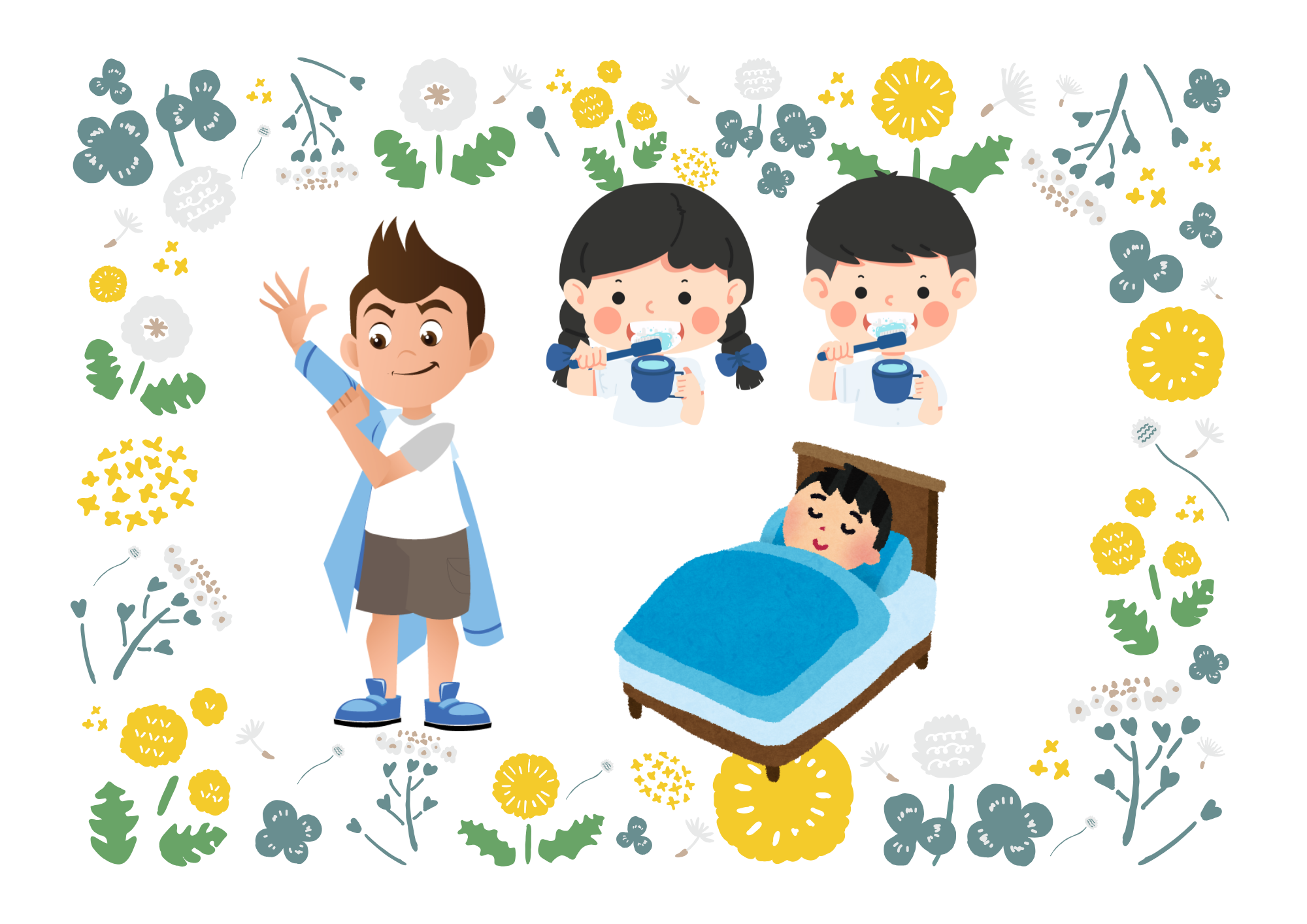
Learning Japanese becomes much more fun when children can use real-life activities.
Today, I’d like to share a free printable bedtime routine worksheet that helps children practice everyday Japanese vocabulary while developing important learning skills.
Whether you are a parent, Japanese teacher, homeschool educator, or occupational therapist, I hope this worksheet will be useful.
What is included?
This free download includes activities that encourage children to think about the correct order of bedtime routines.
Examples include:
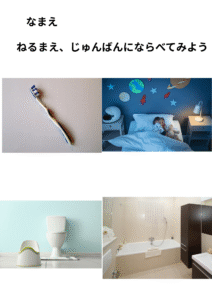
- Toothbrush
- Bed
- Toilet
- Bathroom
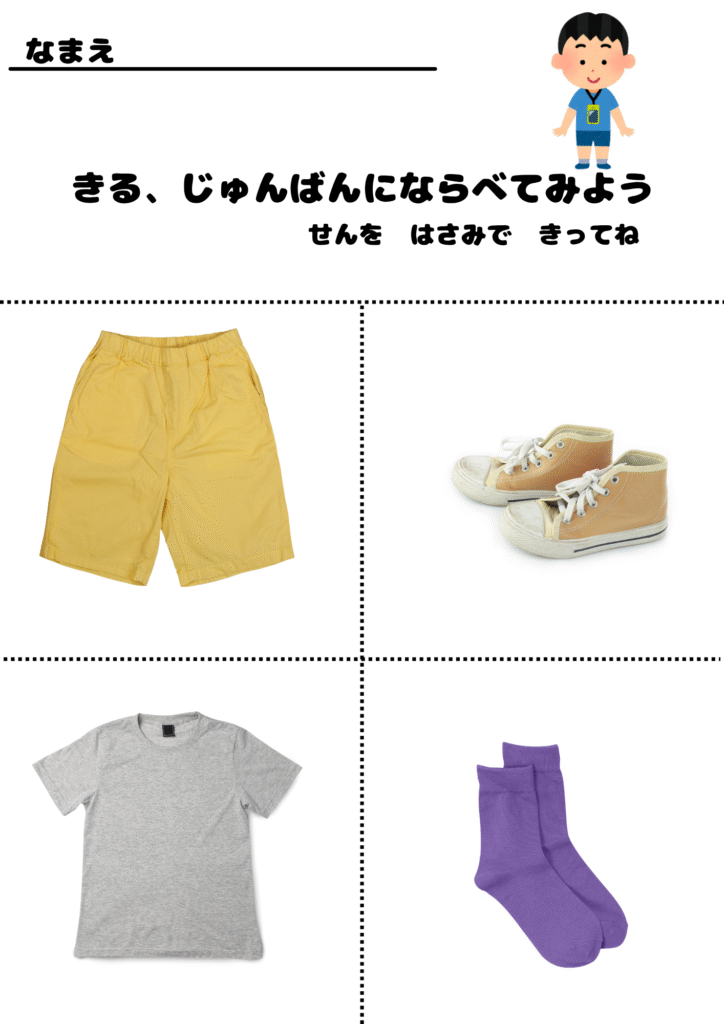
- Clothing
- Shoes
Children cut out the pictures and place them in the correct sequence.
This simple activity makes learning Japanese more interactive and enjoyable.
Clothes Activity Bedtime Routine
Learning Benefits
This worksheet helps children practice many important skills, including:
- Japanese vocabulary
- Daily routine understanding
- Sequencing skills
- Visual perception
- Eye movement skills
- Visual tracking
- Attention and concentration
- Thinking and problem-solving
- Hand-eye coordination
- Independent daily living skills (ADL)
Because children use both their eyes and hands while thinking about the correct order, they naturally strengthen several developmental skills at the same time.
Perfect for
This printable can be used by:
- Parents at home
- Japanese language teachers
- Preschool and kindergarten teachers
- Occupational therapists
- Special education teachers
- Homeschool families
How to Use
- Download the worksheet.
- Print it on A4 paper.
- Cut out the pictures.
- Ask the child to arrange the pictures in the correct order.
- Practice saying the Japanese words together.
- Praise the child after completing the activity.
You can also laminate the worksheet for repeated use.
Why I Created This Worksheet
As an occupational therapist and Japanese language teacher, I enjoy creating learning materials that support both language development and everyday life skills.
My goal is to help children learn Japanese naturally through meaningful daily activities.
I hope these worksheets make learning enjoyable for children around the world.
Why I Use Real Photographs Instead of Illustrations
Many children’s worksheets use cute illustrations or cartoons.
While illustrations are attractive, children often learn more effectively with real photographs.
In child development, real objects are the easiest to understand. The next easiest are photographs, because they closely resemble the objects children see in everyday life. Illustrations come after photographs, as they are more abstract.
When children only see illustrations, they may have difficulty connecting the picture with the real object they use every day. This can make it harder to remember new vocabulary and daily routines.
For this reason, I designed these worksheets using real photographs whenever possible. My goal is to help children recognize familiar objects more easily and apply what they learn to real-life situations.
This approach is especially helpful for young children and for those who benefit from additional visual support, such as children learning Japanese or children receiving occupational therapy.
コメント